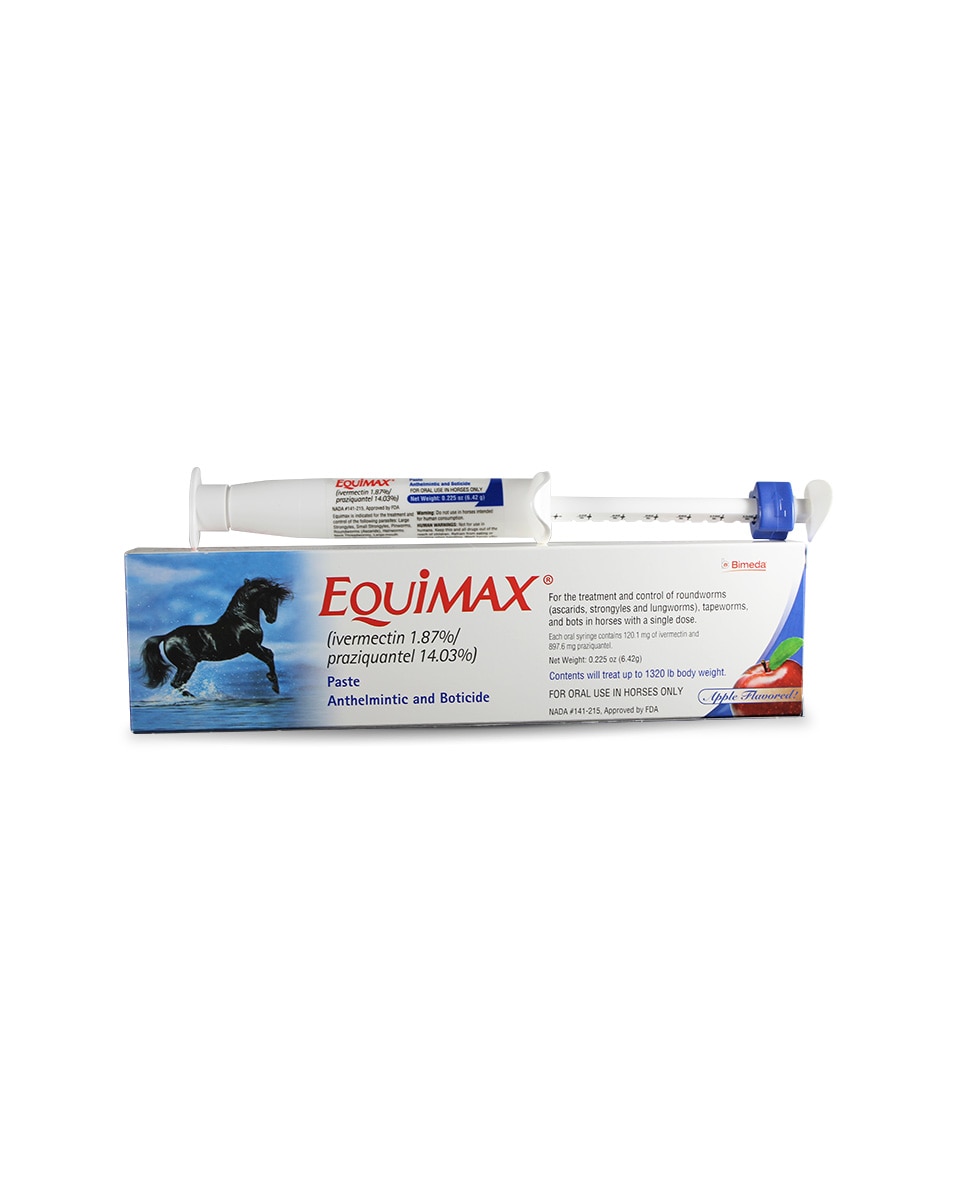
When should I use Equimax instead of an ivermectin-only dewormer?
Equimax combines ivermectin with praziquantel, providing broad parasite coverage that includes tapeworms, which ivermectin alone does not address. This makes Equimax particularly relevant when tapeworm coverage is appropriate within your horse’s parasite-control program. Rather than routinely rotating products, Bimeda recommends selecting dewormers based on fecal testing, seasonal risks, and veterinary guidance.
Does my horse still need Equimax if its fecal egg count is low?
A standard fecal egg count is useful for measuring strongyle egg shedding, but it can miss or underestimate tapeworm infections and does not detect several immature parasite stages. Therefore, a low result does not necessarily rule out the need for broader parasite coverage. Your horse’s age, season, management, and previous deworming should also be considered.
Is Equimax safe for foals, pregnant mares, and breeding stallions?
Yes. Equimax is labeled for horses and foals 4 weeks of age and older, and Bimeda states that it can also be used in pregnant and lactating mares and breeding stallions. This broad age and reproductive safety profile can make Equimax a practical option in barns managing horses at several different life stages.
What if my horse spits some of the Equimax paste out after I give it?
Receiving the full weight-appropriate amount is important. Bimeda notes that underdosing can contribute to parasite resistance, so accurately determine your horse’s weight, set and lock the syringe accordingly, and make sure the paste is swallowed. Equimax is apple-flavored, which is designed to encourage acceptance and reduce the likelihood of horses spitting out the product.
Do I need to give Equimax at a certain time of year for tapeworm coverage?
Timing can depend on your horse’s location, grazing season, and individual parasite-control program. Because Equimax contains praziquantel for tapeworm coverage, it may be incorporated when seasonal tapeworm control is appropriate. Current parasite-control guidance favors using testing, regional parasite patterns, management practices, and veterinary recommendations rather than following the same calendar for every horse.