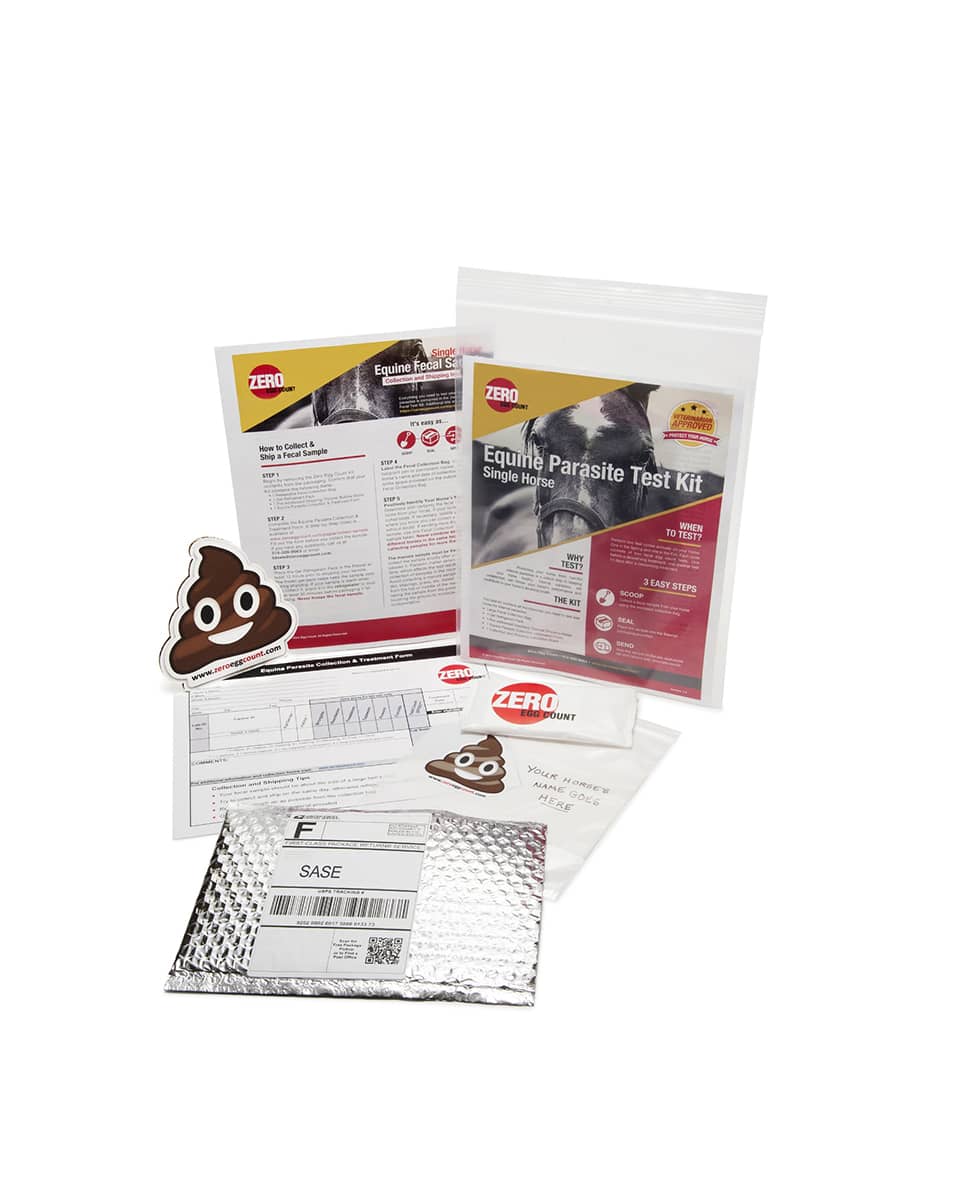
How fresh does my horse’s manure sample need to be for the Zero Egg Count test?
Fresh is best. Zero Egg Count recommends collecting manure shortly after your horse passes it, ideally from the top or middle of the pile to avoid dirt and bedding. If you cannot ship it immediately, refrigerate the sample—never freeze it—and send it as soon as possible using the included frozen refrigerant pack.
How quickly will I get my horse’s Zero Egg Count results back?
Zero Egg Count emails results within 48 hours after the sample arrives at its laboratory. Your report identifies the types and numbers of parasite eggs detected, categorizes your horse as a low, moderate, or high shedder, and provides next-step information. Mailing time to the laboratory should be considered separately from the 48-hour processing window.
Should I use the Zero Egg Count test before or after giving my horse a dewormer?
For routine fecal egg-count testing, timing matters because recently administered dewormers can temporarily affect results. Zero Egg Count recommends allowing the appropriate egg-reappearance period after previous deworming before performing a pretreatment test. When specifically evaluating how well a dewormer worked, the company recommends a second fecal egg count 14 days after deworming.
If my horse’s Zero Egg Count result comes back at zero, does that mean I can skip deworming?
Not necessarily. A zero result means parasite eggs were not detected in the manure sample at the time of testing; it does not mean the horse has no internal parasites. Results are intended to help owners and veterinarians make more targeted parasite-management decisions rather than automatically deworming every horse according to the same schedule.
Can I use one Zero Egg Count kit for multiple horses in my barn?
No. Each kit is designed to test one horse, and samples from different horses should never be combined. Zero Egg Count recommends positively identifying each horse’s manure and collecting it in its own labeled bag. Testing horses individually allows each horse to receive its own egg count, shedder classification, and information for developing an individualized parasite-management program.