Do I need to remove my horse’s shoe before using Vetericyn Hoof Soak?
Vetericyn recommends removing the shoe when possible because this gives the solution greater access to the hoof. However, a recently applied shoe may remain in place without negatively affecting the soak. Ask your farrier before removing the shoe, particularly if your horse follows a specific trimming or shoeing schedule.
Should I use a bucket or a hoof boot with Vetericyn Hoof Soak?
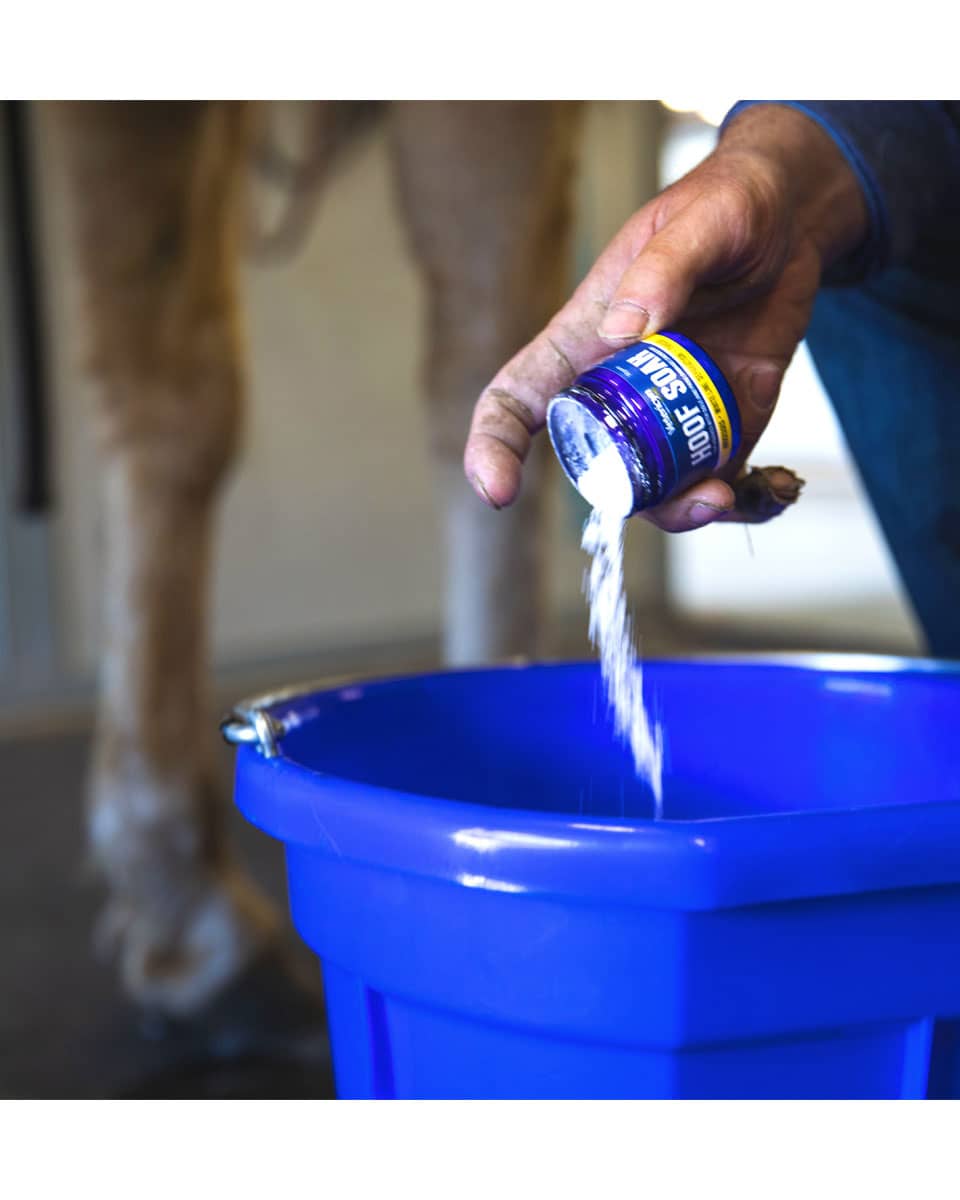
Either a clean bucket or hoof-soaking boot may be used. Select the option that keeps the hoof consistently submerged while allowing your horse to stand comfortably. A secured soaking boot may work better for horses that move frequently or dislike standing in a bucket, while a bucket may be suitable for horses that stand quietly.
How soon should I use Vetericyn Hoof Soak after mixing it?
Use the prepared solution within 90 minutes of mixing it with water. Vetericyn Hoof Soak is intended for immediate use and should not be stored for a later application. Prepare the mixture only when you are ready to begin, ensuring the full soaking process can be completed while the solution remains within its recommended-use timeframe.
How often can I repeat Vetericyn Hoof Soak?
If the problem returns, Vetericyn states that a second soak may be completed two to four weeks after the first. For horses with a history of recurring hoof concerns, the product may be used every three to four months or after extended exposure to wet conditions. Consult your farrier to determine an appropriate schedule for your horse.
Can I use Vetericyn Hoof Care Spray with Vetericyn Hoof Soak?
Vetericyn Hoof Care Spray is the only additional hoof product the manufacturer recommends using alongside the soak. Do not apply other hoof formulas or drawing salves as part of the same routine unless directed by a professional. Limiting the routine to compatible products helps prevent another formula from interfering with direct contact between the soak and hoof.